

Future technologies & enabling plasma Processes
internship applications are open
for undergraduate and graduate students
RESEARCH
Building plasma science and engineering (PSE) research capacity in AL, including Low-Temperature Plasma (LTP) and space plasma science, in academic institutions and partners
INTERNSHIPS
Supporting undergraduate and graduate education, training, and research opportunities, and encouraging and enabling access to plasma physics
K-12 OUTREACH
Creating new educational and outreach resources and plans for K-12 students and teachers, promoting plasma science and engineering (PSE) and general STEM
Ftpp initiative
The NSF EPSCoR Future Technologies and Enabling Plasma Processes (FTPP) is a 10-member university and industry consortium. The project leverages Alabama’s laboratory and space plasma science expertise to contribute scientific knowledge, technologies, and workforce to Alabama’s aerospace, manufacturing, advanced materials, medical, bioscience, and agricultural sectors.


→ This image presents the collaboration among the partners.
events
-
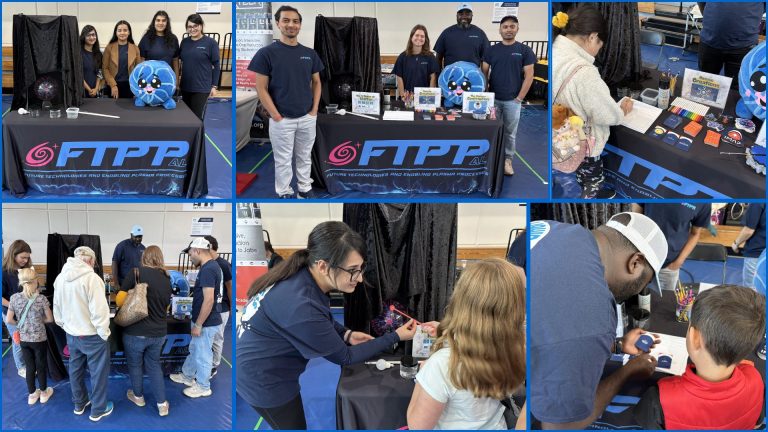
FTPP and IMAP Participated in STEAMFest!
The Future Technologies & enabling Plasma Processes (FTPP) and Interstellar Mapping and Acceleration Probe (IMAP) teams were proud to participate…
-
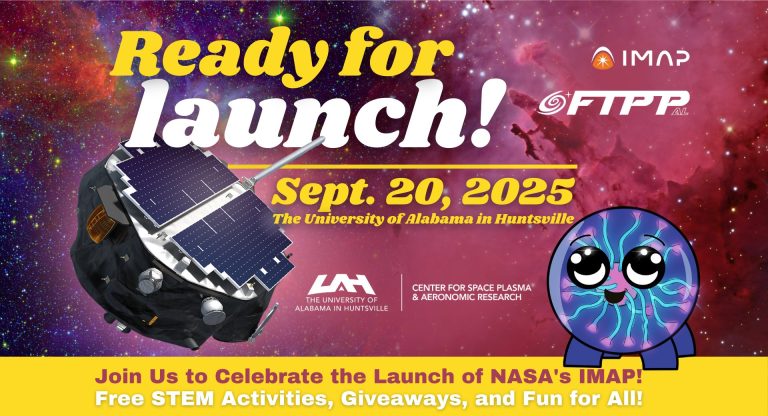
Ready for launch! – event
We are excited to invite you to the Future Technologies and Enabling Plasma Processes (FTPP) Ready for Launch event on…
-
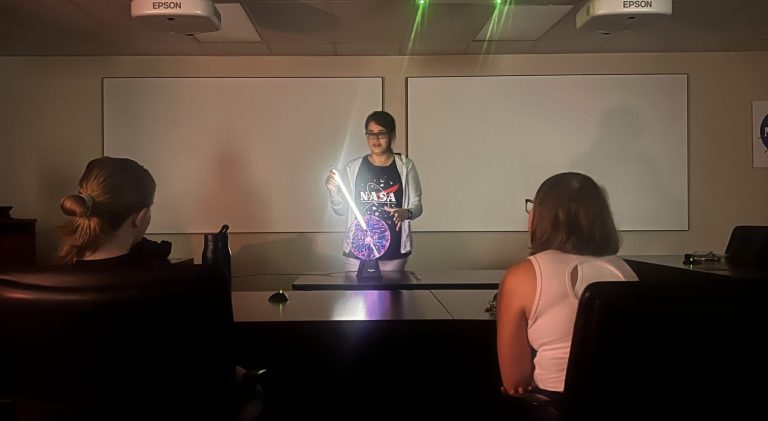
CSPAR and FTPP Host SCS Bridge Program Outreach Event
The Center for Space Plasma and Aeronomic Research (CSPAR), in collaboration with Future Technology & Enabling Plasma Processes (FTPP), hosted…

What is plasma?
Plasma is a state of matter consisting of a collection of ionized particles, electrically neutral atoms, and molecules. It makes up more than 90% of the observable universe and underpins several high-tech manufacturing industries. Familiar forms of plasma include the sun, stars, lightning, neon signs, television screen displays, welder’s torches, and rocket exhaust.

NSF EPSCoR FTPP
Building research, education, economic, and workforce capacity through discoveries in space & lab plasma physics and creating innovative technologies.

Congratulations to Monika Karki, UAH Space Science graduate student and first author, on this exciting...

Applications are open, and today, we’re featuring the CIPTA program! 🚀💡
CIPTA gives students the...

Applications are open, and today, we’re featuring the RIPP program! 🔬✨
With projects for undergraduates...

Dr. Laxman Adhikari’s doctoral-level turbulence class didn’t just learn about research. They did research. Together,...
NSF EPSCor ftpp
About the cooperative agreement
FTPP involves a partnership comprising nine universities and a research corporation in Alabama and is funded through Cooperative Agreement OIA-2148653 by the National Science Foundation (NSF) through a Research Infrastructure Improvement (RII) Track-1 five-year grant within the Established Program to Stimulate Competitive Research (EPSCoR)*. The FTPP project is overseen by the Alabama EPSCoR Steering Committee.
* Disclaimer: The opinions, findings, and conclusions, or recommendations expressed are those of the author(s) and do not necessarily reflect the views of the National Science Foundation.
vision
Alabama becomes a world-renowned hub for PSE (Plasma Science Engineering) by developing transformative future technologies (such as advanced materials, food safety and sterilization, space weather prediction) and building foundational plasma science research and industry with a skilled workforce.
Mission
FTPP will build research, education, economic, and workforce capacity in pursuit of making foundational discoveries in space and laboratory plasma physics and create future societally transformative technologies in the State of AL, utilizing Alabama’s statewide expertise in plasma science and technology.